

2026 NPT Review Conference
NAPF and RTT’s Youth Delegation
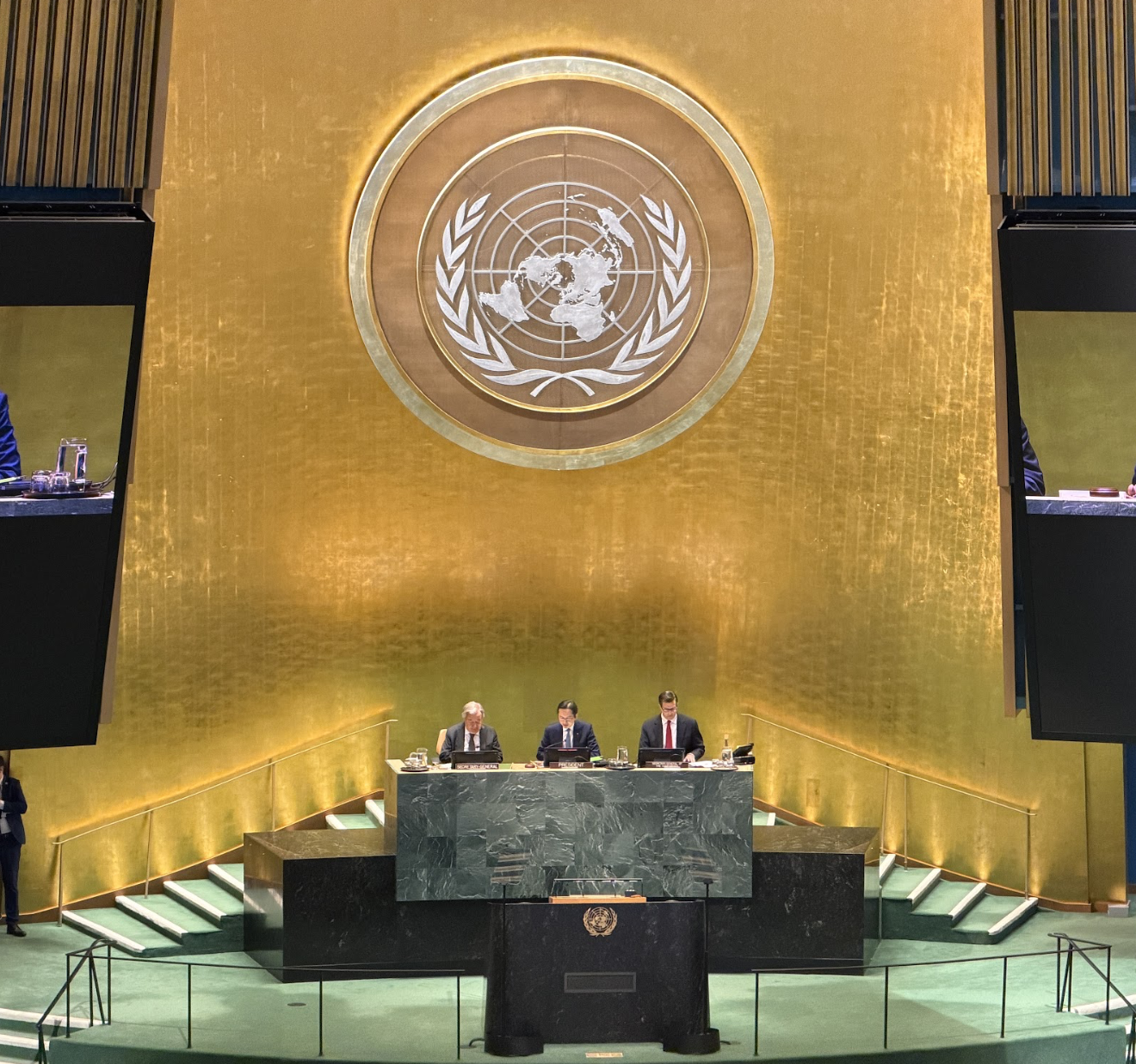
2026 NPT Review COnference
The Eleventh Review Conference of the Parties to the Treaty on the Non-Proliferation of Nuclear Weapons (NPT) was held from 27 April to 22 May 2026 at United Nations Headquarters in New York. Open to all States parties to the Treaty, the Review Conference was responsible for reviewing the operation of the Treaty and considering measures to strengthen its implementation. The Conference addressed substantive and procedural issues related to nuclear disarmament, nuclear non-proliferation, and the peaceful uses of nuclear energy. The President of the Eleventh Review Conference was Ambassador Do Hung Viet.
Meet The Team
-

Dr. Ivana Hughes
Dr. Ivana Nikolić Hughes is President of the Nuclear Age Peace Foundation and a Senior Lecturer in the Discipline of Chemistry at Columbia University. She holds a BS with Honors from Caltech, where she studied chemical engineering and completed her Senior Thesis with Prof. Frances Arnold, the first American woman to win a Nobel Prize in Chemistry. Dr. Hughes obtained her PhD from Stanford University, where she was an American Heart Association Predoctoral Fellow. She has been a faculty member at Columbia University since 2008 and was awarded the Lenfest Distinguished Columbia Faculty Award for 2020. Her work on ascertaining the radiological conditions in the Marshall Islands has been covered widely. Dr. Hughes currently serves as a member of the Scientific Advisory Group to the Treaty on the Prohibition of Nuclear Weapons, a committee consisting of 15 experts from around the world who advise the states parties on scientific issues as they pertain to the treaty. Her writing has appeared in The Nation, Bulletin of the Atomic Scientists, The Hill, Scientific American, Truthout, Common Dreams, Transcend Media Service, The Diplomat, and elsewhere.
-

Christian N. Ciobanu
Christian N. Ciobanu is the Director of Policy and Advocacy of the Nuclear Age Peace Foundation and the Project Coordinator for RTT. He is also a Kim Koo Fellow at the Korea Society. He has been a nuclear disarmament activist since 2010. Christian is also serving as an advisor on the Treaty on the Prohibition of Nuclear Weapons (TPNW) for the Permanent Mission of Kiribati, where he works extensively with the Co-Chairs of the Intersessional Informal Working Group on Articles 6 and 7 of the TPNW. Previously, he served as the Nuclear Age Peace Foundation’s Geneva and New York representative and an advisor for the Permanent Mission of the Marshall Islands.
Ciobanu holds an MA in Nonproliferation and Terrorism Studies from the Middlebury Institute of International Studies (Monterey, CA) and an MA in Political Science from the Graduate Institute of International and Development Studies (Geneva, Switzerland).
-

Kenneth Chiu
Kenneth Chiu is the Communications and Media Coordinator for the Nuclear Age Peace Foundation and a Youth Activist for nuclear disarmament. Kenneth is a graduate of Williams College, where he majored in Economics and Political Science with a focus on comparative politics.
As an activist in the field of nuclear disarmament, Kenneth helped to launch Reverse the Trend as a NAPF intern. He has participated in a number of international disarmament conferences, such as the TPNW First and Second Meeting of States Parties, the 10th NPT Review in New York, and most recently the G7 Hiroshima Youth Summit in April 2023. At the 10th NPT Review Conference, he served as a panelist for the side event “Nuclear Disarmament and Our Sustainable Future,” co-organized by the Hiroshima and Nagasaki Prefectures.
-

Alei Rizvi
Alei Rizvi is the Deputy Director of Reverse the Trend. He graduated from NYU in 2021 with a B.A. in International Relations and Economics with a regional specialization in the Middle East and North Africa. He has an extensive history of disarmament and climate justice activism and has attended many international conferences with the Nuclear Age Peace Foundation and Reverse the Trend, including the First Meeting of State Parties to the TPNW in Vienna (2022), the ICAN Youth Forum in Paris (2020), and the Global Youth Forum on the TPNW in Auckland (2018).
-

Muhammad Ibraheem Waraich
Muhammad Ibraheem Waraich is the youth advisor for RTT. As a youth advisor for Reverse the Trend, he is gaining policy-making experience and encouraging youth advocacy on nuclear disarmament. He is also a student at Rhodes College, majoring in International Studies and minoring in Asian Studies, Jewish, Islamic, and Middle Eastern Studies. He has a background in international relations and climate advocacy. In the summer of 2022, he interned for the Pakistani Ministry of Climate Change. Ibraheem is an executive board member of his college’s chapter of Amnesty International and helps host events around universal human rights issues.
-
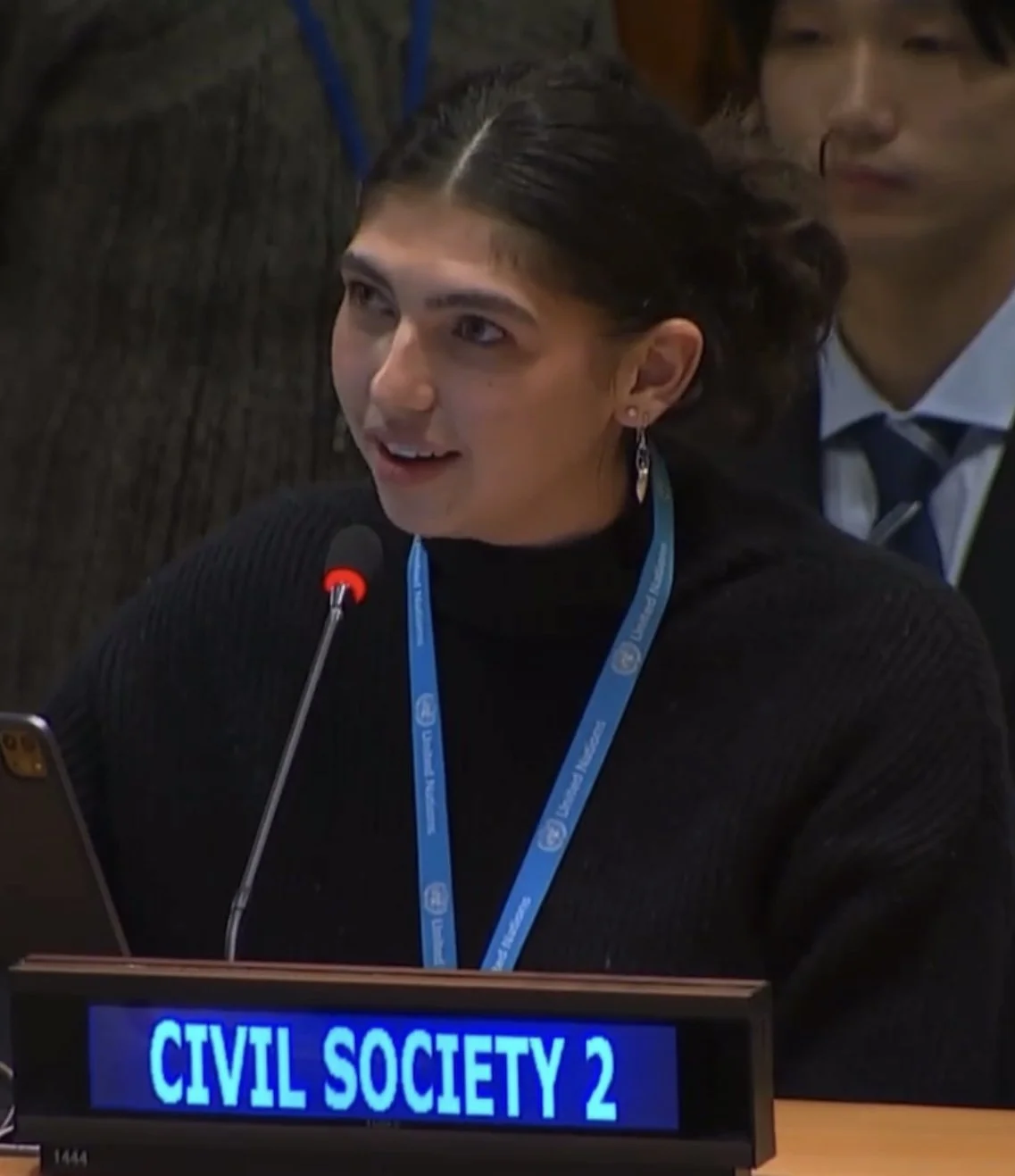
Stella Rose (Consultant)
A passionate advocate for human and environmental rights, Stella Dean Rose is a native Angeleno turned New Yorker, currently completing her undergraduate studies at Fordham University in International Relations and Theology. He work centers on nuclear disarmament, gender equality, and bridging the gap between youth, women, and policymakers. Through advocacy and advisory roles with the Nuclear Age Peace Foundation and Reverse the Trend, Stella has been involved in leading youth interventions at international fora, producing policy reports, and briefing officials on security issues. As she nears graduation, Stella is focused on independent research, with a goal of advancing humanitarian justice through gender mainstreaming and fostering collaboration across generations.
Meet Our Youth Delegation
-

Anaïs Abuzar
Anaïs Abuzar is an undergraduate student at New York University studying International Relations. Her interests include Middle Eastern and South Asian politics, as well as the intersection of diplomacy and global security. She is particularly interested in how advocacy, policy, and international cooperation can address issues of accountability and support affected communities. Anaïs hopes to contribute to more effective and equitable approaches to global challenges through research and outreach, and she is eager to continue supporting the work of the Nuclear Age Peace Foundation.
-

Mia Barth
Mia Barth is an undergraduate student at New York University pursuing a B.A. in International Relations with a European regional specialization and a minor in Economics, maintaining a 3.9 GPA. Half Egyptian and half American, she brings a multicultural perspective to her work in diplomacy and global affairs. Fluent in multiple languages, Mia has experience in public service, global policy research, and legal work through roles with Save the Children, a New York State Assembly campaign, and a Washington, D.C. based law firm. A student leader and aspiring lawyer, she is committed to advancing nuclear nonproliferation, international cooperation, and youth engagement in policymaking.
-

Salma Bayoumy
Salma Bayoumy is a senior at Georgetown University in Qatar, studying International Politics and minoring in French and Francophone Studies. Originally from Egypt, her interest in global affairs is shaped by experiences including serving as a delegate at the United Nations Third Meeting of States Parties (3MSP), participating in an experiential learning program in The Hague on international law and justice, and volunteering with vulnerable communities in Afghanistan and Washington, DC. These experiences have shaped her belief that advocacy and policy must be grounded in both legal frameworks and lived realities. With a global perspective, she approaches international law and diplomacy with a focus on justice, accountability, and inclusion. She aspires to become a lawyer who challenges systemic injustices and contributes to more equitable global systems.
-

Max Caiola
Max Caiola is a sophomore at New York University studying Politics, with minors in Public Policy & Management and Law & Society. He is particularly interested in international law, the role international organizations play in humanitarian aid, and the dynamics of interaction among foreign powers. Last year, he worked with the GO Project, where he supported educational programming for underserved students, helping to create a structured and engaging learning environment while mentoring young participants. He also interned at the New York State Assembly, where he contributed to efforts addressing tenant rights and assisted with constituent services and policy-related research.
-

Melanie Isabel Castillo-Gavilanes
Melanie Isabel Castillo-Gavilanes is a freshman at New York University, pursuing a B.A. in Psychology and International Relations with a minor in Child and Adolescent Mental Health Studies. Of Ecuadorian heritage, she was born and raised in Geneva, a city at the heart of international diplomacy, before moving to the United States at 16 to continue her education. As Director of Advocacy in her residence hall and Politics Chair of the NYU Ecuadorian Student Association, she is already actively engaged in building community and amplifying voices on campus. Melanie is committed to nuclear disarmament as a foundational step toward protecting the world's children, recognizing that the threat of nuclear weapons undermines the stable, safe environments that young people need to thrive. She believes that lasting peace is built not only through policy, but through investing in the mental health and well-being of the next generation. Her multicultural upbringing and interdisciplinary studies fuel her conviction that a brighter future begins with giving children the foundations, emotional, social, and political—to grow up in a world free from the shadow of mass destruction.
-

Hadia Choudhary
Hadia Choudhary is an NYU student focused on public policy, data science, and social impact. She is the founder of a youth-led 501(c)(4) advocating to end the Uyghur genocide. She serves as the treasurer of The Social Justice Art Project at NYU. She is also a poet and has performed across the country and traveled with the NYU Honors Program to Florence and Abu Dhabi. Over the past couple of years, she has had several internships and has worked with a mental health app, a tech-based startup, and engaged in research-based work. She is also deeply connected to the professional and academic network at the NYU Wagner Graduate School of Public Service.
-

Hana Elzayat
Hana Elzayat is a sophomore at NYU studying Economics and Global Liberal Studies with a concentration in Law and Ethics. Originally from Cairo, Egypt, and raised in the United States, she brings a personal and academic interest in global governance, international law, and the political dynamics that shape state-to-state cooperation. She has worked as a research assistant at NYU’s Institute for Policy Integrity, interned with the International Rescue Committee, and participated in the NYU Young Ambassadors for Peace program, shaping her interest in international law and conflict resolution. At this conference, she is particularly interested in how nuclear disarmament can be approached in a way that is both realistic and equitable, balancing national security concerns with broader global responsibility.
-
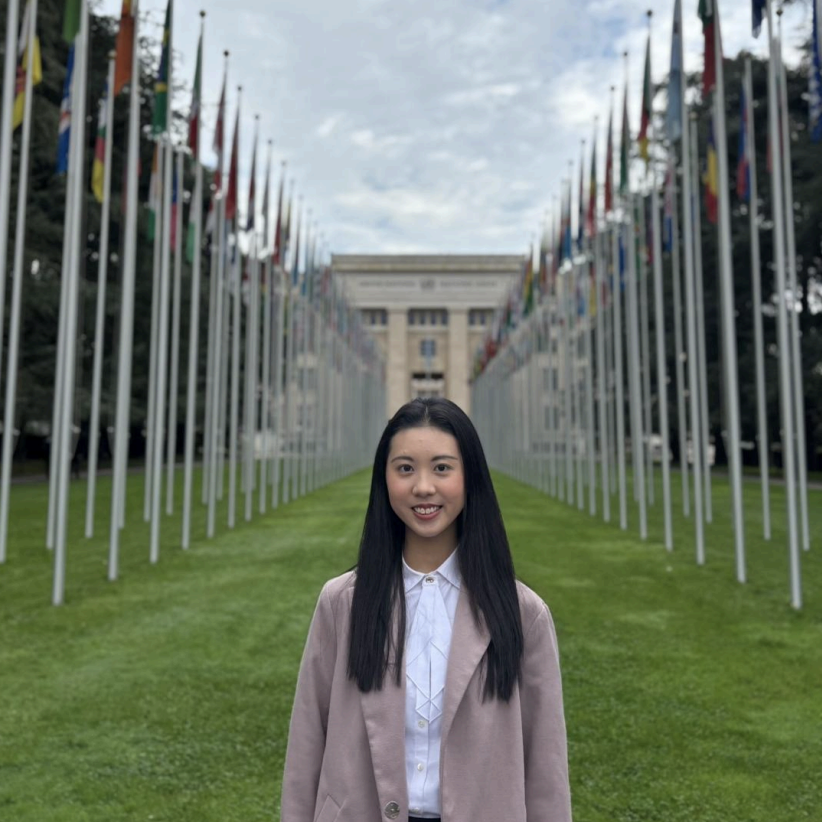
Lilliana Fan
Lilliana Fan is a Space Security Research Fellow at the United Nations Institute for Disarmament Research and Research Scholar in Space and Planetary Law at New York University. She graduated from the European Space Agency’s Summer Course on Space Law and Policy in 2024 and authored four publications on space law. She serves as Research Co-Lead for the Space Generation Advisory Council, leading an international research team examining legal gaps in space data security governance and information sharing, advancing the development of sustainable and safe space policies. She has represented SGAC at major international forums such as UNIDIR Outer Space Security Confernece, the International Astronautical Congress, UNCOPUOS, and the International Law Association. Lilliana openly supports the “no first use” doctrine and nuclear disarmament both generally and in the outer space context.
-

Nguyen Ngoc Ha Anh
Nguyen Ngoc Ha Anh is a Vietnamese youth advocate focused on ethnic minority rights, gender equity, and global policy. She is currently pursuing a B.A. in International Relations and Economics at New York University. She has authored and published two peer-reviewed research papers on H'mong women and girls, examining barriers to sexuality education and postpartum health outcomes, and is an independent researcher on H'mong ethnic identity and costume patterns. Her advocacy spans both the grassroots and global levels. As President of Pom Paj Liab back in Vietnam, she led annual charity teaching trips to rural Vietnam serving marginalized children, organized a cultural exhibition in Hanoi, and donated books to underserved schools in Hoa Binh. As a Policy Research Associate at Vietnam's Ministry of Ethnic and Religious Affairs, she contributed to national development strategies for ethnic minorities. On the international stage, Ha Anh serves on the United Nations Vietnam Youth Advisory Board, representing youth in UN consultations and contributing to Vietnam's SDG roadmap. She currently advocates for disarmament and as a Youth Advocate at Reverse The Trend, and serves as youth delegate at the 2026 ECOSOC Youth Forum at the United Nations.
-

Elise Kelso
Elise Kelso is a student at New York University pursuing a B.A. in International Relations and Environmental Studies, with a focus on global security and policy. She is particularly interested in the intersection of environmental challenges and international conflict. Elise writes for NYU’s IR Insider, covering political developments in Sub-Saharan Africa. Her experience from working on a Maryland state senate campaign and engaging in environmental leadership through organizations like the Chesapeake Bay Foundation and the Sierra Club sparked her interest in these fields. She is passionate about advancing thoughtful, policy-driven approaches to global peace and security
-

Rory Kurzenberger
Rory Kurzenberger is an undergraduate student at New York University studying International Relations and History. Her area of focus is conflict resolution, though she is also very passionate about humanitarian affairs. Rory has been writing for NYU’s International Relations news publication, IR Insider, for two years, covering both Sub-Saharan African and Eastern-Central European affairs. She strives to build a well-rounded understanding of foreign politics and current affairs, approaching conflict resolution from both a logistical perspective as well as one of historical and cultural understanding
-

Isa Lauchengco
Isa Lauchengco is a Master’s student in International Relations at NYU, concentrating in International Law. Originally from the Philippines, Isa earned her Bachelor’s degree in Politics and Philosophy from NYU, with plans of going to law school! During her undergraduate years, she was Head Delegate of NYU’s MUN Travel Team. Her academic interests include legal theory, international justice and security, and the intersection of entertainment and politics. Isa previously interned with the United Nations, ACLU, and the Brennan Center for Justice. Outside of school, she enjoys photography, updating her Beli account, and reading philosophy books that make her brain hurt.
-

Ivan Mikulencak
Ivan Mikulencak is a junior studying International Relations at NYU. With a passion for languages, he speaks both French and Russian and is particularly interested in diplomacy, multilateral institutions, and the role of international organizations in addressing global crises. He has worked with the Jordan Hashemite Charity Organization, where he assisted in the delivery of humanitarian aid to Gaza, gaining firsthand experience with the operational challenges of international relief efforts. His broader experience includes policy research and public sector work in New York, where he works as a communications intern for the New York State Assembly.
-

Isabella Planas
Isabella Planas is an undergraduate at NYU studying Economics and International Relations. Originally from Peru, her commitment to global affairs is rooted in years of community engagement, including founding and leading initiatives supporting communities and hospitals. These experiences shaped her belief that effective policy must reflect lived realities. With a multicultural perspective, she approaches diplomacy and international cooperation with a focus on equity, inclusion, and meaningful impact. Isabella is particularly interested in bridging global policy with local needs to drive sustainable human-centered change. She aspires to be part of a new generation of leaders shaping more just and inclusive global systems.
-

Isabel Ponce
Isabel Ponce is a student studying Economics with a minor in Russian Language at New York University. Her academic interests sit at the intersection of economic systems and geopolitical dynamics, with a particular focus on the economic role in international relations. Her study of Russian language and culture has deepened her understanding of a pivotal player in nuclear nonproliferation. Through her time abroad in Kyrgyzstan, she has developed a commitment to cross-cultural communication and collaboration. She aspires to a career in international development or diplomacy, where economic insight and intercultural understanding drive meaningful change.
-

Bayan Quneibi
Bayan Quneibi is an International Politics student at Georgetown University in Qatar, with a certificate in Media and Politics from Northwestern University. Her work focuses on U.S. foreign policy, human rights and minority rights, and the intersection of media, narrative, and international security. She is a published author on issues including Gaza, secularism in France, and evolving models of justice, and has conducted field research on refugee integration in Europe. Bayan contributes to policy discussions, public dialogue platforms, and international research initiatives, with a growing focus on diplomacy, nuclear non-proliferation, and multilateral security frameworks.
-

Zohal Raouf
Zohal Raouf is a freshman at NYU, studying Global Liberal Studies with a concentration in Politics, Rights, and Development and double major in Sociology. As an Afghan-American with international experiences, Zohal has a multifaceted understanding of the causes and impacts of corruption, instability, and insecurity on human rights. She is committed to reevaluating international frameworks to ensure their effectiveness in global communities. Zohal has experience in policy research, civic engagement, and public speaking. This contributes to her interests in international law, human rights, and advocacy. She aspires to be an international lawyer determined to increase international cooperation, security, and justice.
-

Machi Sakurai
Machi Sakurai is a freshman at New York University, currently in the Global Liberal Studies program with a concentration in Psychology, with an anticipated transfer to the Tisch School of the Arts for the Drama program and double major in Psychology. As a Japanese student with years long experience with participation in numerous Model United Nation events, Machi has a profound interest into the causes and impacts of nuclear weapons, as his grandmother survived the Hiroshima bombing. He is committed to fostering discussion regarding nuclear energy and exploring how modern arts or performing arts can be used to communicate these ideas. Machi has experience in public speaking, policy research, and theatrical storytelling. These contribute to his interests in nuclear disarmament, historical memory, and the power of performance to bear witness to human experience. He aspires to be a voice for those silenced by conflict, honoring his grandmother’s stories and memories, through both advocacy and the arts.
-

Lily Sternlieb
Lily Sternlieb is an undergraduate at Wellesley College majoring in International Relations. She focuses on nuclear security, arms control, and the intersection of law and global governance, with additional research experience at MIT. Her work includes archival research on the relationship between academic institutions and weapons development, as well as legal and policy research at the U.S. Court of International Trade. She is particularly interested in deterrence, great-power competition, and the role of institutions in shaping security policy.
-

Elan Zakim
Elan Zakim is a sophomore studying Politics and Middle Eastern Studies. His interests include the Middle East’s politics, culture, and regional dynamics, as well as the role of nuclear energy and nonproliferation in global security. He is particularly interested in how policy and diplomacy shape long-term stability and cooperation. Elan hopes to contribute to more effective international systems through research and writing, and he aspires to work as a writer for a newspaper or think tank.
Side Events
Side Events
International Youth Summit on Nuclear Disarmament
When: Saturday 25 April 2026, 15:30 - 19:00
Organizers: NAPF, RTT, Office of Senator Marilou McPhedran, Hiroshima and Nagasaki Peace Messengers, Peace Boat US, Qazaq Nuclear Frontline Coalition (QNFC), Association Katawara, Youth for the TPNW, Soka Gakkai International
Location: 12 East 49th Street, 18th Floor
Navigating a new era for nuclear energy in the Middle East
When: Monday 27 April 2026, 13:15 - 14:30
Organizer: UNIDAR
Location: Conference Room 1
An Interfaith Vigil on the Occasion of the 2026 Nuclear Non-proliferation Treaty (NPT) Review Conference
When: Wednesday 29 April 2026, 9:00-9:30
Organizer: Soka Gakkai International
Location: Church Center for the UN, Chapel (777 UN Plaza, 1st Floor)
Taking Stock of the NPT: Achievements, Persistent Challenges, and Emerging Opportunities
When: Wednesday 29 April 2026, 10:15-11:45
Organizer: Mayors for Peace
Location: Conference Room A
Civil society briefing: Switzerland
When: Wednesday 29 April 2026, 9:15-9:45
Organizer: Reaching Critical Will
Location: Contact Laura Varella for location
Prospects for a Nuclear and Fossil Free Future: Live link-up with activists at the Fossil Fuel Phase-Out Conference in Santa Marta, Colombia and at the NPT Review Conference in New York
When: Monday 27 April 2026, 13:30 - 14:45
Organizer: Warheads to Windmills Coalition
Location: In person at the Bahai International Center, next to the UN building, and online via zoom
Strengthening the CTBT to Safeguard the NPT
When: Tuesday 28 April 2026, 13:15-14:30
Organizers: European Leadership Network and Norway
Location: Conference Room 12
Humanitarian Consequences of nuclear weapons use – experiences from Pacific Islands States
When: Tuesday 28 April 2026, 13:15-14:30
Organizer: Austria
Location: Conference Room C
Bombshell Documentary Screening + discussion
When: Tuesday 28 April 2026, 18:00-21:00
Organizers: Stanley Center for Peace and Security’s Developing Story Project, in partnership with Fordham University’s Department of Communication and Media Studies and The Bulletin of the Atomic Scientists
Location: Museum of Art and Design (2 Columbus Circle, New York, NY 10019)
From stalemate to solutions: Rethinking nuclear arms control
When: Monday 27 April 2026, 13:00 - 15:00
Organizer: Chatham House
Location: Conference Room A
Nuclear Justice: Korean and Japanese Atomic Bomb Survivors & Movements for Justice
When: Monday 28 April 2026, 17:40 - 20:00
Organizers: John Jay College for Criminal Justice, Manhattan Project for a Nuclear-Free World, Solidarity for Peace and Reunification of Korea (SPARK)
Location: John Jay College, 524 W. 59th St., New Building 9.64
Nuclear Disarmament, Not Nuclear Hypocrisy
When: Tuesday 28 April 2026, 12:00 - 13:00
Organizer: Campaign for Nuclear Disarmament (CND)
Location: Online Zoom Register
Nuclear risks and risk reduction
When: Monday 27 April 2026, 15:00-18:00
Organizers: Abolition 2000 and PNND
Location: Conference Room A
Mayors for Peace Youth Forum
When: Tuesday 28 April 2026, 10:30 - 12:30
Organizer: Mayors for Peace
Location: Conference Room A
Film screening of DEMON MINERAL, a documentary film that exposes impacts of uranium mining on Diné Bikeyah (Navajo Nation)
When: Tuesday 28 April 2026, 13:00-15:00
Organizers: Indigenous World Association, Formidable Entities
Location: UN Church Center (777 UN Plaza, 2nd Fl)
Effects of Nuclear War and its Consequences
When: Tuesday 28 April 2026, 13:00-15:00
Organizers: Hiroshima Prefectural Government, Nagasaki Prefectural Government and Pugwash
Location: Conference Room A
Establishing Rights for Nuclear Victims: The Role of Younger Generations
When: Tuesday 28 April 2026, 15:00-18:00
Organizer: GENSUIKIN; Manhattan Project for a Nuclear-Free World
Location: Conference Room A
Preventing the NPT Regime From the Erosion
When: Wednesday 29 April 2026, 12:00-13:15
Organizer: Nagasaki Youth Delegation
Location: Conference Room A
Progress and Prospects for Conference on the MEFZNWMD
When: Wednesday 29 April 2026, 13:15-14:30
Organizers: President of the Seventh Session of the Conference (Sultanate of Oman) and UN Office for Disarmament Affairs
Location: Conference Room 12
An Interfaith Vigil on the Occasion of the 2026 Nuclear Non-proliferation Treaty (NPT) Review Conference
When: Wednesday 29 April 2026, 9:00-9:30
Organizer: Soka Gakkai International
Location: Church Center for the UN, Chapel (777 UN Plaza, 1st Floor)
Taking Stock of the NPT: Achievements, Persistent Challenges, and Emerging Opportunities
When: Wednesday 29 April 2026, 10:15-11:45
Organizer: Mayors for Peace
Location: Conference Room A
Civil society briefing: Switzerland
When: Wednesday 29 April 2026, 9:15-9:45
Organizer: Reaching Critical Will
Location: Contact Laura Varella for location
French national report: implementation of NPT 2010 Action plan
When: Wednesday 29 April 2026, 13:15-14:45
Organizer: France
Location: Conference Room 1
Strengthening the CTBT to Safeguard the NPT
When: Tuesday 28 April 2026, 13:15-14:30
Organizers: European Leadership Network and Norway
Location: Conference Room 12
Humanitarian Consequences of nuclear weapons use – experiences from Pacific Islands States
When: Tuesday 28 April 2026, 13:15-14:30
Organizer: Austria
Location: Conference Room C
Bombshell Documentary Screening + discussion
When: Tuesday 28 April 2026, 18:00-21:00
Organizers: Stanley Center for Peace and Security’s Developing Story Project, in partnership with Fordham University’s Department of Communication and Media Studies and The Bulletin of the Atomic Scientists
Location: Museum of Art and Design (2 Columbus Circle, New York, NY 10019)
Book Launch event: My Deepest Desire
When: Wednesday 29 April 2026, 13:00-14:00
Organizer: Western States Legal Foundation
Location: United Nations Bookshop, GA Building, Visitors’ Concourse
Revitalizing Nuclear Disarmament and Non-Proliferation Education
When: Wednesday 29 April 2026, 13:15-14:45
Organizers: NAPF, RTT, Austria, Mexico, Peace Boat US, and Center for Nonproliferation Studies
Location: John Jay College, 524 W. 59th St., New Building 9.64
Nuclear Disarmament, Not Nuclear Hypocrisy
When: Tuesday 28 April 2026, 12:00 - 13:00
Organizer: Campaign for Nuclear Disarmament (CND)
Location: 777 UN Plaza, 2nd Floor
Advancing nuclear energy applications for peaceful purposes
When: Wednesday 29 April 2026, 13:15-14:45
Organizers: Viet Nam
Location: Conference Room 8
Mayors for Peace Youth Forum
When: Tuesday 28 April 2026, 10:30 - 12:30
Organizer: Mayors for Peace
Location: Conference Room A
Film screening of DEMON MINERAL, a documentary film that exposes impacts of uranium mining on Diné Bikeyah (Navajo Nation)
When: Tuesday 28 April 2026, 13:00-15:00
Organizers: Indigenous World Association, Formidable Entities
Location: UN Church Center (777 UN Plaza, 2nd Fl)
Effects of Nuclear War and its Consequences
When: Tuesday 28 April 2026, 13:00-15:00
Organizers: Hiroshima Prefectural Government, Nagasaki Prefectural Government and Pugwash
Location: Conference Room A
Establishing Rights for Nuclear Victims: The Role of Younger Generations
When: Tuesday 28 April 2026, 15:00-18:00
Organizer: GENSUIKIN; Manhattan Project for a Nuclear-Free World
Location: Conference Room A
Plenary Sessions
Plenary Sessions
Monday 28 April
10am-1pm - Opening Remarks
3pm-6pm General Debate
Tuesday 29 April
10am-1pm General Debate Continues
3pm-6pm General Debate Continues
Wednesday 30 April
10am-1pm General Debate Continues
3pm-6pm NGO Presentations
Thursday 1 May
10am-1pm Cluster 1 Issues
3pm-6pm Cluster 1 Issues
Friday 2 May
10am-1pm Cluster 1 Specific Issue
3pm-6pm Cluster 1 Specific Issue (Continued)
Monday 5 May
10am-1pm Cluster 2 Issues
3pm-6pm Cluster 2 Specific Issue
Tuesday 6 May
10am-1pm Cluster 2 Specific Issue (Continued)
3pm-6pm Cluster 3 Issues
Wednesday 7 May
10am-1pm Cluster 3 Specific Issues
3pm-6pm Cluster 3 Specific Issue (Continued)
Thursday 8 May
10am-1pm Organization of the 2026 Review Conference & Consideration of the draft report on the results of the Preparatory Committee and recommendations of the Preparatory Committee to the Review Conference
3pm-6pm Consideration of the draft report on the results of the Preparatory Committee and recommendations of the Preparatory Committee to the Review Conference (Continued)
Friday 9 May
10am-1pm Consideration of the draft report on the results of the Preparatory Committee and recommendations of the Preparatory Committee to the Review Conference (Continued)
3pm-6pm Adoption of the final report of the Preparatory Committee & Any other matters
Resources
Resources
What is the NPT?
The NPT is a landmark international treaty whose objective is to prevent the spread of nuclear weapons and weapons technology, to promote cooperation in the peaceful uses of nuclear energy and to further the goal of achieving nuclear disarmament and general and complete disarmament. The Treaty represents the only binding commitment in a multilateral treaty to the goal of disarmament by the nuclear-weapon States. Opened for signature in 1968, the Treaty entered into force in 1970. On 11 May 1995, the Treaty was extended indefinitely. A total of 191 States have joined the Treaty, including the five nuclear-weapon States. More States have ratified the NPT than any other arms limitation and disarmament agreement, a testament to the Treaty’s significance.
The Treaty is regarded as the cornerstone of the global nuclear non-proliferation regime and an essential foundation for the pursuit of nuclear disarmament. It was designed to prevent the spread of nuclear weapons, to further the goals of nuclear disarmament and general and complete disarmament, and to promote cooperation in the peaceful uses of nuclear energy
To further the goal of non-proliferation and as a confidence-building measure between States parties, the Treaty establishes a safeguards system under the responsibility of the International Atomic Energy Agency (IAEA). Safeguards are used to verify compliance with the Treaty through inspections conducted by the IAEA. The Treaty promotes cooperation in the field of peaceful nuclear technology and equal access to this technology for all States parties, while safeguards prevent the diversion of fissile material for weapons use.
2000 NPT Review Conference - 13 Practical Steps
The paragraph containing the 13 steps may be found in the Final Document of the 2000 Review Conference in the section 15. It says:
The Conference agrees on the following practical steps for the systematic and progressive efforts to implement Article VI of the Treaty on the Non-Proliferation of Nuclear Weapons and paragraphs 3 and 4(c) of the 1995 Decision on "Principles and Objectives for Nuclear Non-Proliferation and Disarmament":
1. The importance and urgency of signatures and ratifications, without delay and without conditions and in accordance with constitutional processes, to achieve the early entry into force of the Comprehensive Nuclear-Test-Ban Treaty.
2. A moratorium on nuclear-weapon-test explosions or any other nuclear explosions pending entry into force of that Treaty.
3. The necessity of negotiations in the Conference on Disarmament on a non-discriminatory, multilateral and internationally and effectively verifiable treaty banning the production of fissile material for nuclear weapons or other nuclear explosive devices in accordance with the statement of the Special Coordinator in 1995 and the mandate contained therein, taking into consideration both nuclear disarmament and nuclear non-proliferation objectives. The Conference on Disarmament is urged to agree on a programme of work which includes the immediate commencement of negotiations on such a treaty with a view to their conclusion within five years.
4. The necessity of establishing in the Conference on Disarmament an appropriate subsidiary body with a mandate to deal with nuclear disarmament. The Conference on Disarmament is urged to agree on a programme of work which includes the immediate establishment of such a body.
5. The principle of irreversibility to apply to nuclear disarmament, nuclear and other related arms control and reduction measures.
6. An unequivocal undertaking by the nuclear-weapon States to accomplish the total elimination of their nuclear arsenals leading to nuclear disarmament to which all States parties are committed under Article VI.
7. The early entry into force and full implementation of START II and the conclusion of START III as soon as possible while preserving and strengthening the ABM Treaty as a cornerstone of strategic stability and as a basis for further reductions of strategic offensive weapons, in accordance with its provisions.
8. The completion and implementation of the Trilateral Initiative between the United States of America, Russian Federation and the International Atomic Energy Agency.
9. Steps by all the nuclear-weapon States leading to nuclear disarmament in a way that promotes international stability, and based on the principle of undiminished security for all:
Further efforts by the nuclear-weapon States to reduce their nuclear arsenals unilaterallyIncreased transparency by the nuclear-weapon States with regard to the nuclear weapons capabilities and the implementation of agreements pursuant to Article VI and as a voluntary confidence-building measure to support further progress on nuclear disarmamentThe further reduction of non-strategic nuclear weapons, based on unilateral initiatives and as an integral part of the nuclear arms reduction and disarmament processConcrete agreed measures to further reduce the operational status of nuclear weapons systemsA diminishing role for nuclear weapons in security policies to minimize the risk that these weapons ever be used and to facilitate the process of their total eliminationThe engagement as soon as appropriate of all the nuclear-weapon States in the process leading to the total elimination of their nuclear weapons
10. Arrangements by all nuclear-weapon States to place, as soon as practicable, fissile material designated by each of them as no longer required for military purposes under IAEA or other relevant international verification and arrangements for the disposition of such material for peaceful purposes, to ensure that such material remains permanently outside of military programmes.
11. Reaffirmation that the ultimate objective of the efforts of States in the disarmament process is general and complete disarmament under effective international control.
12. Regular reports, within the framework of the NPT strengthened review process, by all States parties on the implementation of Article VI and paragraph 4 (c) of the 1995 Decision on "Principles and Objectives for Nuclear Non-Proliferation and Disarmament", and recalling the Advisory Opinion of the International Court of Justice of 8 July 1996.
13. The further development of the verification capabilities that will be required to provide assurance of compliance with nuclear disarmament agreements for the achievement and maintenance of a nuclear-weapon-free world.
2010 64 point Action Plan
At the 2010 NPT Review Conference, states parties adopted a 64 point action plan in order to further the implementation of the treaty. http://www.nonproliferation.org/wp-content/uploads/2015/04/2010_revcon_action_plan_only.pdf
I. Nuclear disarmament
Action 1: All States parties commit to pursue policies that are fully compatible with the Treaty and the objective of achieving a world without nuclear weapons.
Action 2: All States parties commit to apply the principles of irreversibility, verifiability and transparency in relation to the implementation of their treaty obligations.
Action 3: In implementing the unequivocal undertaking by the nuclear-weapon States to accomplish the total elimination of their nuclear arsenals, the nuclear-weapon States commit to undertake further efforts to reduce and ultimately eliminate all types of nuclear weapons, deployed and non-deployed, including through unilateral, bilateral, regional and multilateral measures.
Action 4: The Russian Federation and the United States of America commit to seek the early entry into force and full implementation of the Treaty on Measures for the Further Reduction and Limitation of Strategic Offensive Arms and are encouraged to continue discussions on follow-on measures in order to achieve deeper reductions in their nuclear arsenals.
Action 5: The nuclear-weapon States commit to accelerate concrete progress on the steps leading to nuclear disarmament, contained in the Final Document of the 2000 Review Conference, in a way that promotes international stability, peace and undiminished and increased security. To that end, they are called upon to promptly engage with a view to, inter alia:
(a) Rapidly moving towards an overall reduction in the global stockpile of all types of nuclear weapons, as identified in action 3;
(b) Address the question of all nuclear weapons regardless of their type or their location as an integral part of the general nuclear disarmament process;
(c) To further diminish the role and significance of nuclear weapons in all military and security concepts, doctrines and policies;
(d) Discuss policies that could prevent the use of nuclear weapons and eventually lead to their elimination, lessen the danger of nuclear war and contribute to the non-proliferation and disarmament of nuclear weapons;
(e) Consider the legitimate interest of non-nuclear-weapon States in further reducing the operational status of nuclear weapons systems in ways that promote international stability and security;
(f) Reduce the risk of accidental use of nuclear weapons; and
(g) Further enhance transparency and increase mutual confidence.
The nuclear-weapon States are called upon to report the above undertakings to the Preparatory Committee at 2014. The 2015 Review Conference will take stock and consider the next steps for the full implementation of article VI.
Action 6: All States agree that the Conference on Disarmament should immediately establish a subsidiary body to deal with nuclear disarmament, within the context of an agreed, comprehensive and balanced programme of work.
Action 7: All States agree that the Conference on Disarmament should, within the context of an agreed, comprehensive and balanced programme of work, immediately begin discussion of effective international arrangements to assure non-nuclear-weapon States against the use or threat of use of nuclear weapons, to discuss substantively, without limitation, with a view to elaborating recommendations dealing with all aspects of this issue, not excluding an internationally legally binding instrument. The Review Conference invites the Secretary-General of the United Nations to convene a high-level meeting in September 2010 in support of the work of the Conference on Disarmament.
Action 8: All nuclear-weapon States commit to fully respect their existing commitments with regard to security assurances. Those nuclear-weapon States that have not yet done so are encouraged to extend security assurances to non-nuclear-weapon States parties to the Treaty.
Action 9: The establishment of further nuclear-weapon-free zones, where appropriate, on the basis of arrangements freely arrived at among States of the region concerned, and in accordance with the 1999 Guidelines of the United Nations Disarmament Commission, is encouraged. All concerned States are encouraged to ratify the nuclear-weapon-free zone treaties and their relevant protocols, and to constructively consult and cooperate to bring about the entry into force of the relevant legally binding protocols of all such nuclear-weapon-free zones treaties, which include negative security assurances. The concerned States are encouraged to review any related reservations.
Action 10: All nuclear-weapon States undertake to ratify the Comprehensive Nuclear-Test-Ban Treaty with all expediency, noting that positive decisions by nuclear-weapon States would have the beneficial impact towards the ratification of that Treaty, and that nuclear-weapon States have the special responsibility to encourage Annex 2 States, in particular those which have not acceded to the Treaty on the Non-Proliferation of Nuclear Weapons and continue to operate unsafeguarded nuclear facilities, to sign and ratify.
Action 11: Pending the entry into force of the Comprehensive Nuclear-Test-Ban Treaty, all States commit to refrain from nuclear-weapon test explosions or any other nuclear explosions, the use of new nuclear weapons technologies and from any action that would defeat the object and purpose of that Treaty, and all existing moratoriums on nuclear-weapon test explosions should be maintained.
Action 12: All States that have ratified the Comprehensive Nuclear-Test-Ban Treaty recognize the contribution of the conferences on facilitating the entry into force of that Treaty and of the measures adopted by consensus at the Sixth Conference on Facilitating the Entry into Force of the Comprehensive Nuclear-Test-Ban Treaty, held in September 2009, and commit to report at the 2011 Conference on progress made towards the urgent entry into force of that Treaty.
Action 13: All States that have ratified the Comprehensive Nuclear-Test-Ban Treaty undertake to promote the entry into force and implementation of that Treaty at the national, regional and global levels.
Action 14: The Preparatory Commission for the Comprehensive Nuclear-Test-Ban Treaty Organization is to be encouraged to fully develop the verification regime for the Comprehensive Nuclear-Test-Ban Treaty, including early completion and provisional operationalization of the international monitoring system in accordance with the mandate of the Preparatory Commission, which should, upon entry into force of that Treaty, serve as an effective, reliable, participatory and non-discriminatory verification system with global reach, and provide assurance of compliance with that Treaty.
Action 15: All States agree that the Conference on Disarmament should, within the context of an agreed, comprehensive and balanced programme of work, immediately begin negotiation of a treaty banning the production of fissile material for use in nuclear weapons or other nuclear explosive devices in accordance with the report of the Special Coordinator of 1995 (CD/1299) and the mandate contained therein. Also in this respect, the Review Conference invites the Secretary-General of the United Nations to convene a high-level meeting in September 2010 in support of the work of the Conference on Disarmament.
Action 16: The nuclear-weapon States are encouraged to commit to declare, as appropriate, to the International Atomic Energy Agency (IAEA) all fissile material designated by each of them as no longer required for military purposes and to place such material as soon as practicable under IAEA or other relevant international verification and arrangements for the disposition of such material for peaceful purposes, to ensure that such material remains permanently outside military programmes.
Action 17: In the context of action 16, all States are encouraged to support the development of appropriate legally binding verification arrangements, within the context of IAEA, to ensure the irreversible removal of fissile material designated by each nuclear-weapon State as no longer required for military purposes.
Action 18: All States that have not yet done so are encouraged to initiate a process towards the dismantling or conversion for peaceful uses of facilities for the production of fissile material for use in nuclear weapons or other nuclear explosive devices.
Action 19: All States agree on the importance of supporting cooperation among Governments, the United Nations, other international and regional organizations and civil society aimed at increasing confidence, improving transparency and developing efficient verification capabilities related to nuclear disarmament.
Action 20: States parties should submit regular reports, within the framework of the strengthened review process for the Treaty, on the implementation of the present action plan, as well as of article VI, paragraph 4 (c), of the 1995 decision entitled “Principles and objectives for nuclear non-proliferation and disarmament”, and the practical steps agreed to in the Final Document of the 2000 Review Conference, and recalling the advisory opinion of the International Court of Justice of 8 July 1996.
Action 21: As a confidence-building measure, all the nuclear-weapon States are encouraged to agree as soon as possible on a standard reporting form and to determine appropriate reporting intervals for the purpose of voluntarily providing standard information without prejudice to national security. The Secretary-General of the United Nations is invited to establish a publicly accessible repository, which shall include the information provided by the nuclear-weapon States.
Action 22: All States are encouraged to implement the recommendations contained in the report of the Secretary-General of the United Nations (A/57/124) regarding the United Nations study on disarmament and non-proliferation education, in order to advance the goals of the Treaty in support of achieving a world without nuclear weapons.
II. Nuclear non-proliferation
Action 23: The Conference calls upon all States parties to exert all efforts to promote universal adherence to the Treaty, and not to undertake any actions that can negatively affect prospects for the universality of the Treaty.
Action 24: The Conference re-endorses the call by previous review conferences for the application of IAEA comprehensive safeguards to all source or special fissionable material in all peaceful nuclear activities in the States parties in accordance with the provisions of article III of the Treaty.
Action 25: The Conference, noting that 18 States parties to the Treaty have yet to bring into force comprehensive safeguards agreements, urges them to do so as soon as possible and without further delay.
Action 26: The Conference underscores the importance in complying with the non-proliferation obligations, addressing all compliance matters in order to uphold the Treaty’s integrity and the authority of the safeguards system.
Action 27: The Conference underscores the importance of resolving all cases of non-compliance with safeguards obligations in full conformity with the IAEA statute and the respective legal obligations of Member States. In this regard, the Conference calls upon Member States to extend their cooperation to the Agency.
Action 28: The Conference encourages all States parties which have not yet done so to conclude and to bring into force additional protocols as soon as possible and to implement them provisionally pending their entry into force.
Action 29: The Conference encourages IAEA to further facilitate and assist the States parties in the conclusion and entry into force of comprehensive safeguards agreements and additional protocols. The Conference calls on States parties to consider specific measures that would promote the universalization of the comprehensive safeguards agreements.
Action 30: The Conference calls for the wider application of safeguards to peaceful nuclear facilities in the nuclear-weapon States, under the relevant voluntary offer safeguards agreements, in the most economic and practical way possible, taking into account the availability of IAEA resources, and stresses that comprehensive safeguards and additional protocols should be universally applied once the complete elimination of nuclear weapons has been achieved.
Action 31: The Conference encourages all States parties with small quantities protocols which have not yet done so to amend or rescind them, as appropriate, as soon as possible.
Action 32: The Conference recommends that IAEA safeguards should be assessed and evaluated regularly. Decisions adopted by the IAEA policy bodies aimed at further strengthening the effectiveness and improving the efficiency of IAEA safeguards should be supported and implemented.
Action 33: The Conference calls upon all States parties to ensure that IAEA continues to have all political, technical and financial support so that it is able to effectively meet its responsibility to apply safeguards as required by article III of the Treaty.
Action 34: The Conference encourages States parties, within the framework of the IAEA statute, to further develop a robust, flexible, adaptive and cost-effective international technology base for advanced safeguards through cooperation among Member States and with IAEA.
Action 35: The Conference urges all States parties to ensure that their nuclear-related exports do not directly or indirectly assist the development of nuclear weapons or other nuclear explosive devices and that such exports are in full conformity with the objectives and purposes of the Treaty as stipulated, particularly, in articles I, II and III of the Treaty, as well as the decision on principles and objectives of nuclear non-proliferation and disarmament adopted in 1995 by the Review and Extension Conference.
Action 36: The Conference encourages States parties to make use of multilaterally negotiated and agreed guidelines and understandings in developing their own national export controls.
Action 37: The Conference encourages States parties to consider whether a recipient State has brought into force IAEA safeguards obligations in making nuclear export decisions.
Action 38: The Conference calls upon all States parties, in acting in pursuance of the objectives of the Treaty, to observe the legitimate right of all States parties, in particular developing States, to full access to nuclear material, equipment and technological information for peaceful purposes.
Action 39: States parties are encouraged to facilitate transfers of nuclear technology and materials and international cooperation among States parties, in conformity with articles I, II, III and IV of the Treaty, and to eliminate in this regard any undue constraints inconsistent with the Treaty.
Action 40: The Conference encourages all States to maintain the highest possible standards of security and physical protection of nuclear materials and facilities.
Action 41: The Conference encourages all States parties to apply, as appropriate, the IAEA recommendations on the physical protection of nuclear material and nuclear facilities (INFCIRC/225/Rev.4 (Corrected)) and other relevant international instruments at the earliest possible date.
Action 42: The Conference calls on all States parties to the Convention on the Physical Protection of Nuclear Material to ratify the amendment to the Convention as soon as possible and encourages them to act in accordance with the objectives and the purpose of the amendment until such time as it enters into force. The Conference also encourages all States that have not yet done so to adhere to the Convention and adopt the amendment as soon as possible.
Action 43: The Conference urges all States parties to implement the principles of the revised IAEA Code of Conduct on the Safety and Security of Radioactive Sources, as well as the Guidance on the Import and Export of Radioactive Sources approved by the IAEA Board of Governors in 2004.
Action 44: The Conference calls upon all States parties to improve their national capabilities to detect, deter and disrupt illicit trafficking in nuclear materials throughout their territories, in accordance with their relevant international legal obligations, and calls upon those States parties in a position to do so to work to enhance international partnerships and capacity-building in this regard. The Conference also calls upon States parties to establish and enforce effective domestic controls to prevent the proliferation of nuclear weapons in accordance with their relevant international legal obligations.
Action 45: The Conference encourages all States parties that have not yet done so to become party to the International Convention for the Suppression of Acts of Nuclear Terrorism as soon as possible.
Action 46: The Conference encourages IAEA to continue to assist the States parties in strengthening their national regulatory controls of nuclear material, including the establishment and maintenance of the State systems of accounting for and control of nuclear material, as well as systems on regional level. The Conference calls upon IAEA Member States to broaden their support for the relevant IAEA programmes.
What is Article VI of the NPT
Each of the Parties to the Treaty undertakes to pursue negotiations in good faith on effective measures relating to cessation of the nuclear arms race at an early date and to nuclear disarmament, and on a treaty on general and complete disarmament under strict and effective international control.
Starting with the 2010 NPT Review Conference, govenments officially expressed their "deep concern at the catastrophic humanitarian consequences of any use of nuclear weapons" and reaffirmed "the need for all States at all times to comply with applicable international law, including international humanitarian law."
Following this, 16 governments delivered a joint statement at the 2012 NPT Preparatory Committee; and 35 governments did so at the 2012 General Assembly First Committee session, highlighting the catastrophic humanitarian consequences of nuclear weapons and calling on all states to intensify their efforts to outlaw these weapons. At the 2013 NPT Preparatory Committee, 80 governments joined in this statement on the humanitarian impact of nuclear weapons, and by the 2013 First Committee, 125 governments were on board.
In addition, the Red Cross/Red Crescent movement adopted a resolution on the topic in 2011, which "finds it difficult to envisage how any use of nuclear weapons could be compatible with the rules of international humanitarian law, in particular the rules of distinction, precaution and proportionality," and urges states to abolish nuclear weapons. In 2013, the movement reconfirmed its commitment to a nuclear ban, adopting a four-year action plan towards the prohibition and elimination of nuclear weapons.
For the first time ever, governments, international organizations, and civil society addressed the catastrophic humanitarian consequences of the use of nuclear weapons at a conference in Oslo, Norway from 4-5 March 2013. The meeting was a huge success, with the participation of 128 governments, UN agencies, international organizations, and civil society. Evidence was presented on the immediate impact of a nuclear weapon detonation and governments and relief agencies alike concluded that no adequate humanitarian response would be possible.
States and other actors convened again in Nayarit, Mexico from 13-14 February 2014 to discuss the global and long-term consequences of a nuclear detonation from the perspective and variables of the 21st century society. In his summary of the meeting, the Chair called for the development of new international standards on nuclear weapons, including a legally binding instrument. The time has come, he noted, for a diplomatic process to reach this goal, within a specified timeframe, identifying the most appropriate forum and on the basis of a clear and substantive framework. Calling for this process to conclude by the 70th anniversary of the bombings of Hiroshima and Nagasaki, the Chair described Nayarit as “the point of no return”.
States and other actors will gather for a third conference in Vienna, Austria from 8-9 December 2014. This meeting will further explore the humanitarian and environmental impacts of a nuclear weapon detonation and will take a look at existing international law relevant to this issue.
Humanitarian Disarmament?
By resolution 71/258, the General Assembly decided to convene in 2017 a United Nations conference to negotiate a legally binding instrument to prohibit nuclear weapons, leading towards their total elimination. The Assembly encouraged all Member States to participate in the Conference, with the participation and contribution of international organizations and civil society representatives.
The Conference took place from 27 to 31 March and from 15 June to 7 July in New York.
The Treaty on the Prohibition of Nuclear Weapons (TPNW) includes a comprehensive set of prohibitions on participating in any nuclear weapon activities. These include undertakings not to develop, test, produce, acquire, possess, stockpile, use or threaten to use nuclear weapons. The Treaty also prohibits the deployment of nuclear weapons on national territory and the provision of assistance to any State in the conduct of prohibited activities. States parties will be obliged to prevent and suppress any activity prohibited under the TPNW undertaken by persons or on territory under its jurisdiction or control. The Treaty also obliges States parties to provide adequate assistance to individuals affected by the use or testing of nuclear weapons, as well as to take necessary and appropriate measure of environmental remediation in areas under its jurisdiction or control contaminated as a result of activities related to the testing or use of nuclear weapons.
The Treaty on the Prohibition of Nuclear Weapons was adopted by the Conference (by a vote of 122 States in favour, with one vote against and one abstention) at the United Nations on 7 July 2017, and opened for signature on 20 September 2017. Following the deposit with the Secretary-General of the 50th instrument of ratification or accession of the Treaty on 24 October 2020, it entered into force on 22 January 2021 in accordance with its article 15 (1).
Treaty on the Prohibition of Nuclear Weapons and the NPT
Nuclear Justice
Nuclear justice is a broad concept encompassing various dimensions of restorative, procedural, and distributive justice related to nuclear weapons and energy. It acknowledges the harms caused by nuclear testing, use, and development, and aims to address the injustices faced by affected communities and individuals. This includes advocating for compensation, truth-telling, apologies, legal reforms, and global disarmament efforts.
Here's a more detailed breakdown:
1. Addressing Past Harms:
Victims of Nuclear Testing
Nuclear justice seeks to provide redress for the health problems, displacement, and environmental damage caused by nuclear testing, particularly in Kazakhstan, Kiribati, and the Marshall Islands.
Hibakusha:
It also recognizes the suffering of individuals affected by the atomic bombings of Hiroshima and Nagasaki in Japan.
Downwinders:
This includes individuals who were exposed to fallout from nuclear weapons testing and other nuclear events.
2. Ensuring a Just Future:
Nuclear Disarmament:
A core aspect of nuclear justice is the call for the complete elimination of nuclear weapons and the prevention of their use or proliferation.
International Cooperation:
Nuclear justice advocates for global collaboration and aid to mitigate the harms caused by nuclear weapons and work towards a more just and equitable world.
Treaty on the Prohibition of Nuclear Weapons (TPNW):
This treaty, also known as the Ban Treaty, is a key step towards nuclear justice by prohibiting the development, testing, production, acquisition, possession, stockpiling, use, or threat of use of nuclear weapons.
3. Key Dimensions of Nuclear Justice:
Redress for Victims:
This includes compensation, health care, and other forms of assistance for those harmed by nuclear weapons.
Truth-Telling and Apologies:
Acknowledging and addressing the injustices of the past through truth-telling and apologies.
Legal Reforms:
Establishing legal frameworks and mechanisms to prevent the recurrence of such harms and hold accountable those responsible.
Procedural Justice:
Ensuring that communities affected by nuclear weapons have a say in decision-making processes and that their voices are heard.
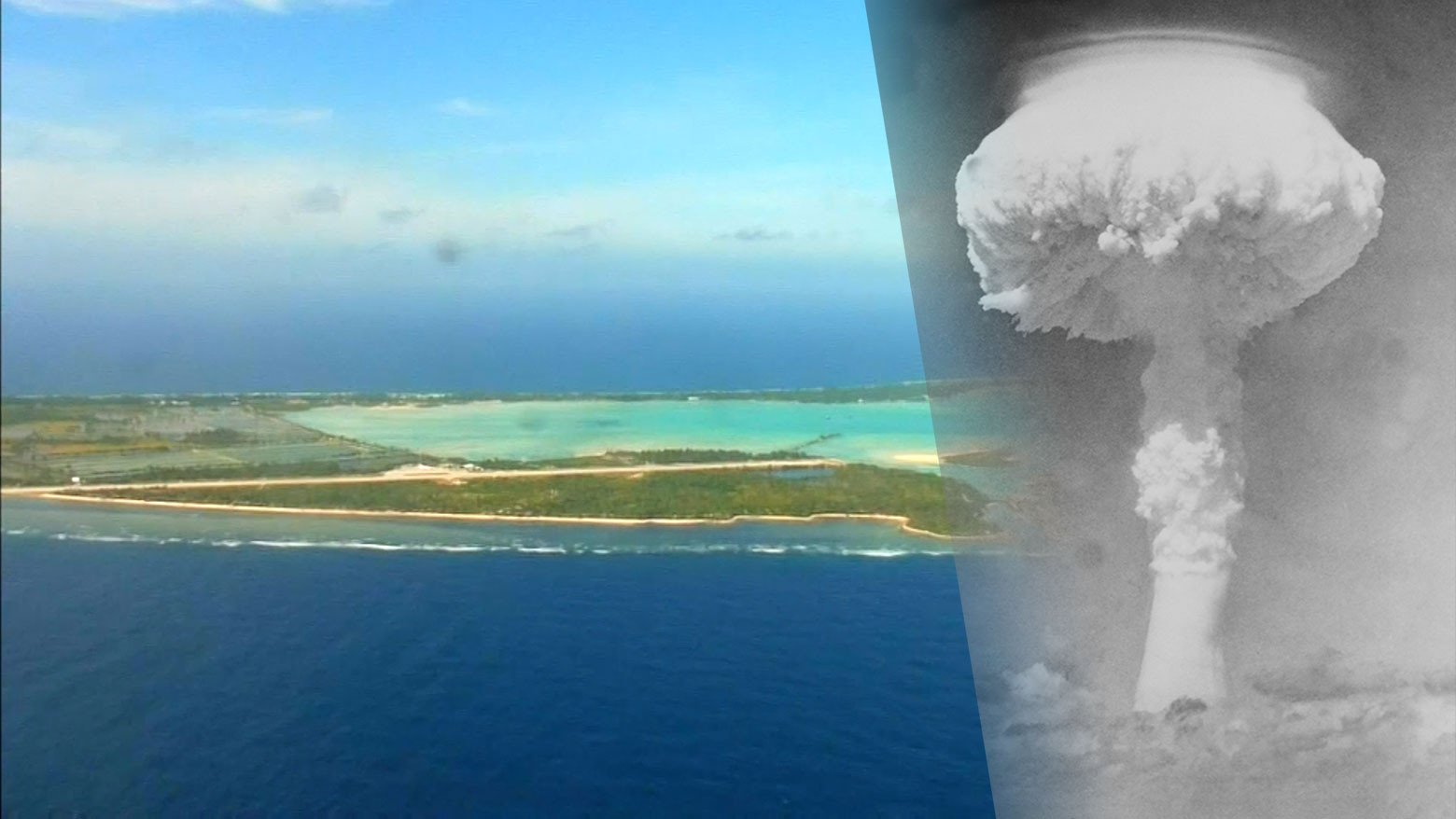
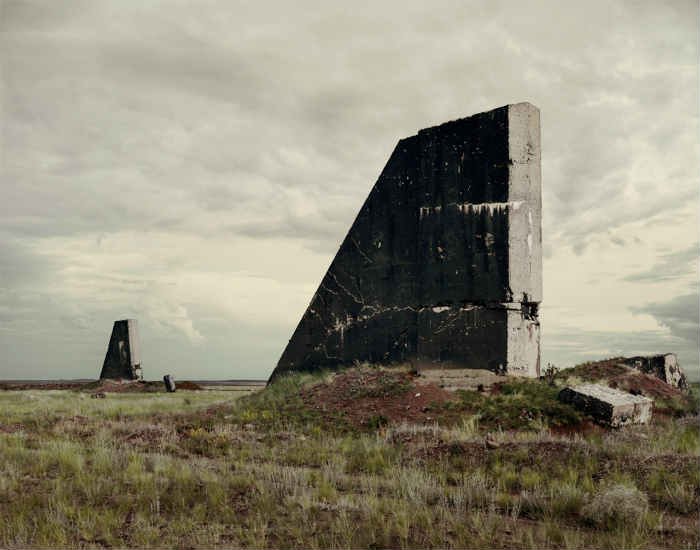
Kazakhstan
Between 1949 and 1989, the Semipalatinsk Test Site was one of the primary locations for Soviet above and below ground nuclear testing. The first Soviet nuclear weapons test, codenamed Pervaya molniya or First Lighting, took place at Semipalatinsk on 29 August 1949.• In total, 456 nuclear tests, including 340 underground and 116 atmospheric tests, were conducted at Semipalatinsk Test Site facilities.
Kiribati
Kiribati is an island country in the central Pacific Ocean, made up of 33 islands. Kiribati is home to the South Pacific’s largest marine reserve. On April 28, 1958, the UK detonated its largest thermonuclear test under Operation Grapple. 1,000 times more powerful than Hiroshima. Daily Mirror – “It was a dress rehearsal for the death of the world… through closed eyes, through dark glasses, and with my hands covering my face, I saw the flash. Brighter than the sun, hotter than the sun, and ripped out of the secrets of the heart of the universe.” The 500 citizens of Kiribati living on Kiritimati at the time of the tests received little protection and inadequate warning. Not being aware of the dangers of such tests, most of them lifted the tarpaulin cover provided for them to catch a glimpse of the intensely hot cloud of fire above.
Marshall Islands

From 1946 to 1958, the United States conducted 67 nuclear test explosions in the Marshall Islands, leaving a devastating health and environmental legacy. In the late 1970s the United States addressed the massive amount of residual contamination by abandoning Bikini as permanently uninhabitable and pushing much of the waste at Enewetak into the open lagoon. Much of the plutonium was dumped into the crater that had been left by an atomic bomb explosion, and then covered with a thin shell of cement. The resultant “Runit dome” sits unmarked and unguarded in a small island and one day will be submerged by the rising waters of the Pacific Ocean, unless it is first torn apart by typhoons. Radiation from the Marshall Islands has already been detected in the South China Sea. In 2022, the UN Human Rights Council adopted a resolution to address this legacy. According to the Marshallese government, it “will receive UN assistance in upholding the rights of the Marshallese people that still bear the scars of this dark chapter of our past”. Nuclear-armed states, including the United States, criticised the move.

PACIFIC CONFERENCE ON THE TPNW
•TPNW is consistent with nuclear disarmament and non-proliferation regime including the NPT and regional instruments, most notably the Treaty of Rarotonga and the Boe Declaration on Regional Security, which reaffirms the importance of the rules-based international order. Supports SDG 16 with its focus on peace, justice and strong institutions. States emphasized the region’s strong interest in its provisions for victim assistance and environmental remediation. Access to such assistance was recognized as being of importance in the region in view of the legacy of nuclear testing Role to play in the global effort to strengthen the norm against these inhumane weapons - “we are small, but we can have a big impact.”
The resolution’s primary purpose is to lay the groundwork for global collaboration and aid, focusing on mitigating the harm inflicted on States that have experienced the use or testing of nuclear weapons. Furthermore, the resolution outlines measures for evaluating the impact of nuclear tests and explores pathways for offering both practical and financial support to those affected, as well as strategies for the rehabilitation of areas contaminated by radiation.
The resolution was brought forward by the Republics of Kazakhstan and Kiribati, co-sponsored by 39 additional States, and supported by the Nuclear Age Peace Foundation, including our Director of Policy and Advocacy, Christian Ciobanu. The overwhelming support was marked by 174 votes in favor (previous vote in the 2023 General Assembly’s resulted in 161 votes in favor). There were four votes against the resolution (Democratic People’s Republic of Korea, France, Russian Federation, and United Kingdom), while six states abstained (China, India, Israel, Pakistan, Poland, and the United States).
While the number of votes in favor increased from 161 in the 2023 General Assembly, the opposition and abstentions remained the same. The vote once again, leaves the majority of the nuclear-armed states, who tested nuclear weapons, alone and isolated when it comes to the topic of nuclear justice. Compared to last year, the updated resolution requests the Secretary-General to convene a one-day meeting on victim assistance and environmental remediation at the United Nations, at an appropriate time in 2026.
2024 RESOLUTION ON
ADDRESSING THE LEGACY OF NUCLEAR WEAPONS
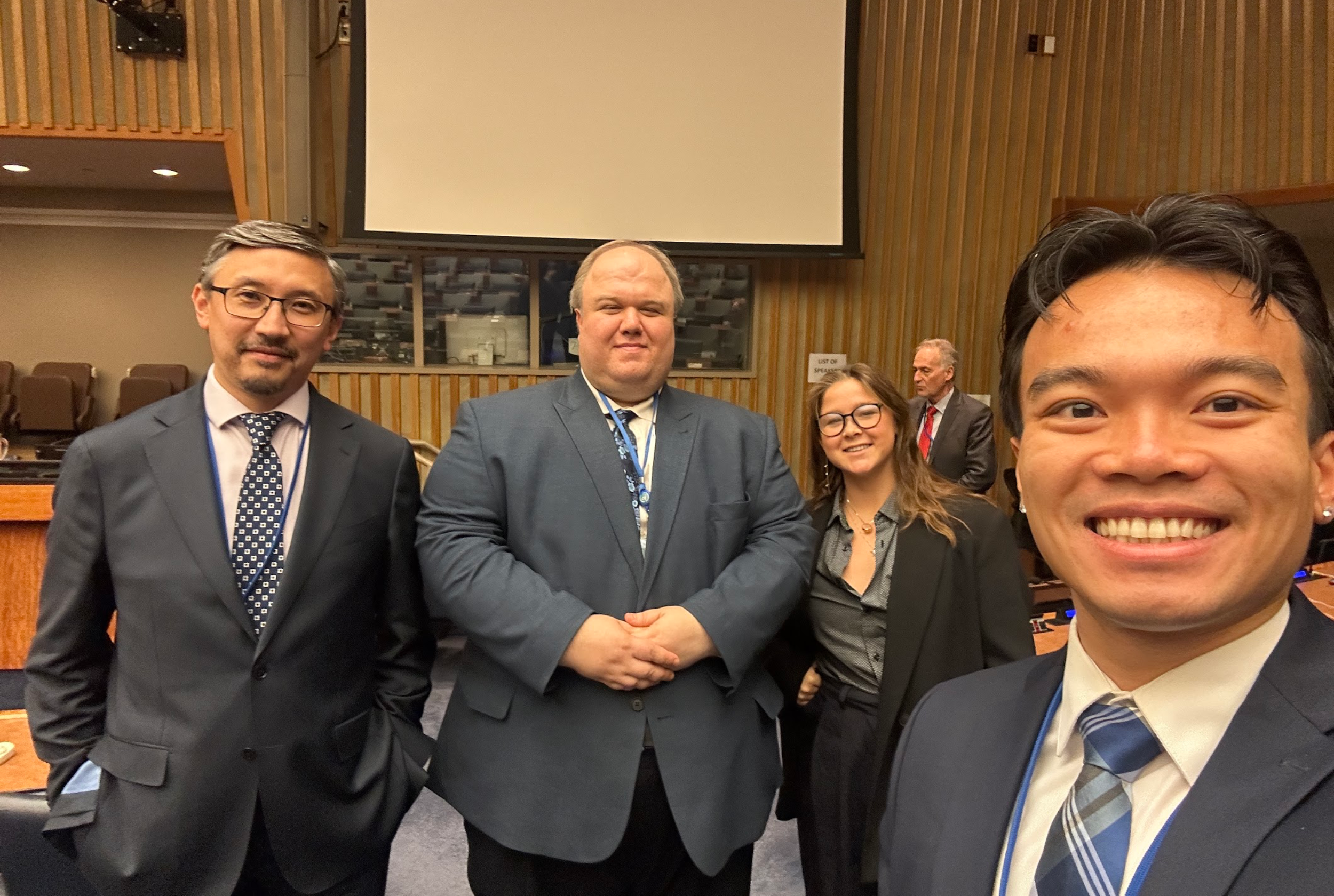
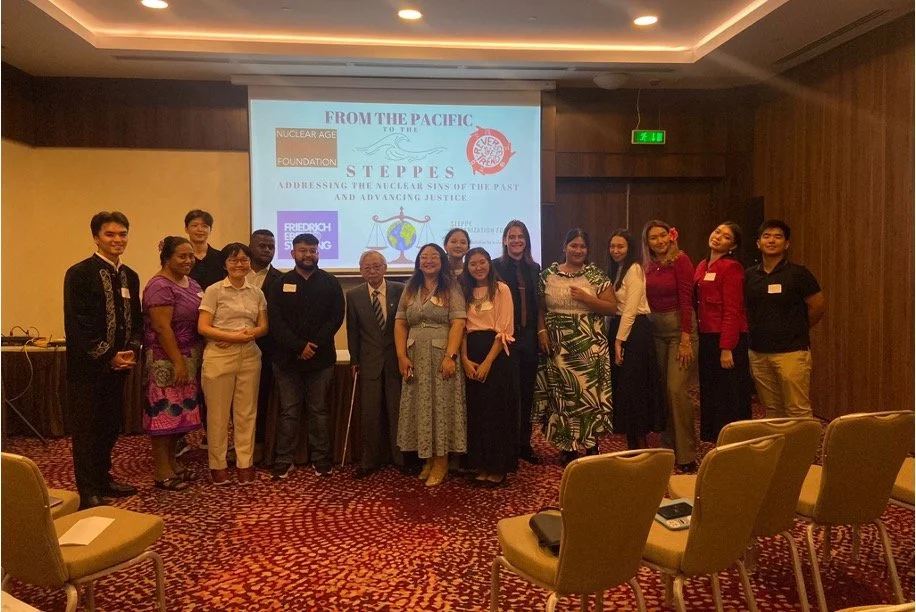
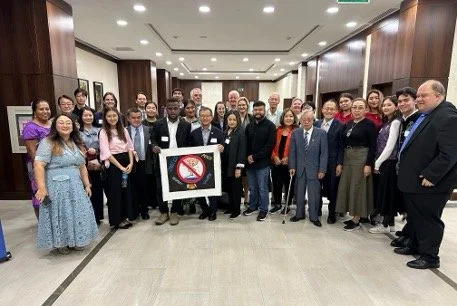
YOUTH FORUM ON NUCLEAR JUSTICE
The Youth Forum on Nuclear Justice convened a diverse array of global stakeholders to address the enduring effects of nuclear weapons testing and use. This platform emphasized the importance of international collaboration, empowering frontline communities, and promoting youth-led initiatives.
The event unfolded in three primary segments. The High-Level Segment in the morning gathered leaders in nuclear disarmament, including notable figures, such as Dr. Ivana Hughes, Christian N. Ciobanu, and H.E. Ambassador Alexander Kmentt. These experts engaged in discussions about existing pathways to justice, reflecting on historical and contemporary efforts aimed at rectifying the legacies of nuclear weapons within the framework of the Treaty on the Prohibition of Nuclear Weapons (TPNW).
Following this segment, the Youth Forum provided a platform for personal testimonies from individuals belonging to affected and frontline communities. This led to a crucial dialogue on the support needed for the proposed TPNW International Trust Fund. Advocacy efforts were showcased, including movements like the Nevada-Semey Initiative and artistic contributions from Kiribati and the Solomon Islands.
The day culminated with an Evening Press Event and Joint Panel featuring members from the Nuclear Survivors Forum and the TPNW Coordination Committee, fostering an intergenerational connection between youth, survivors, and policymakers. Key outcomes of the forum included the formal adoption of a compelling Youth Declaration aimed at the members of the Coordination Committee and the establishment of a sustained Youth Network dedicated to advancing nuclear justice.
NUCLEAR WEAPON FREE ZONES
OTHER ISSUES
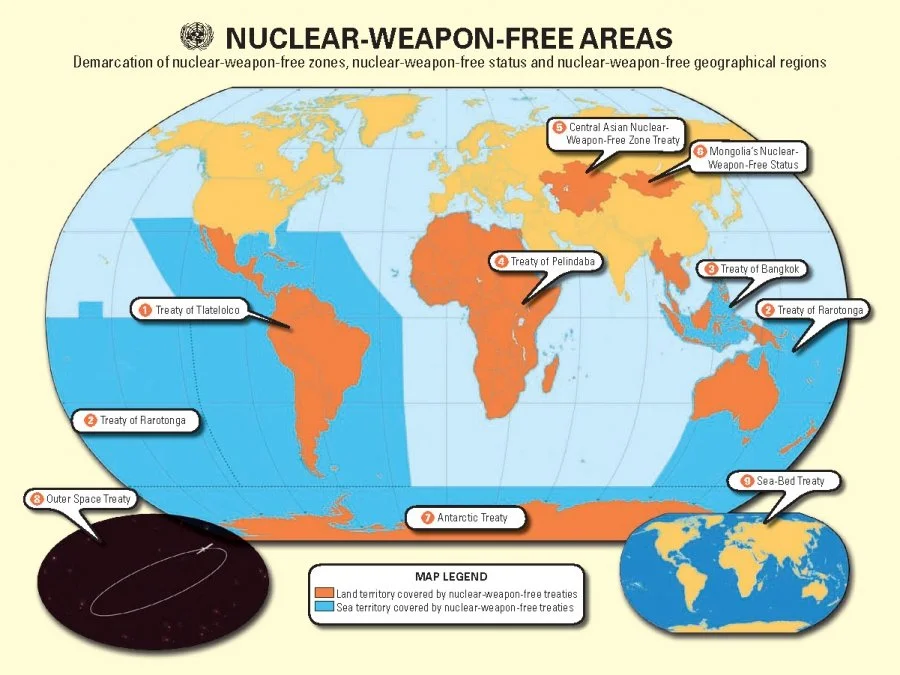
Nuclear-weapon-free zones (NWFZs) are regional agreements where States commit to not having nuclear weapons within their territories, covering aspects like development, manufacturing, possession, and testing.These zones aim to strengthen global nuclear non-proliferation and disarmament efforts. Five major NWFZs exist, covering Latin America, the South Pacific, Southeast Asia, Africa, and Central Asia.
Key aspects of NWFZs:
Commitments:
Countries within NWFZs agree not to develop, manufacture, acquire, test, or possess nuclear weapons.
Regional Agreements:
NWFZs are established through treaties or conventions, with signatories agreeing to international verification and compliance mechanisms.
Nuclear-Weapon States' Obligations:
OPANAL notes that nuclear-weapon states have obligations to respect the status of NWFZs and refrain from using or threatening to use nuclear weapons against the countries in the zones.
Examples of NWFZs:
Treaty of Tlatelolco: Covers Latin America and the Caribbean.
Treaty of Rarotonga: Covers Oceania and the South Pacific.
Treaty of Bangkok: Covers Southeast Asia
Treaty of Pelindaba: Covers Africa
Treaty of Semipalatinsk: Covers Central Asia.
Non-Proliferation:
NWFZs contribute to the global effort to prevent the spread of nuclear weapons.
Verification:
Treaties establishing NWFZs include provisions for verification and compliance systems to ensure adherence to the agreements.
Negative Security Assurances
Negative security assurances (NSAs) are promises by nuclear-weapon states not to use or threaten to use nuclear weapons against non-nuclear-weapon states that are party to the Nuclear Non-Proliferation Treaty (NPT). They are a key element in the NPT regime, designed to encourage states to renounce nuclear weapons in confidence that their security will not be jeopardized by nuclear-armed states.
Key aspects of negative security assurances:
Promises of non-use:
NSAs are essentially a pledge by nuclear-weapon states that they will not use nuclear weapons against non-nuclear-weapon states that have agreed not to acquire them.
Link to the NPT:
NSAs are typically linked to the NPT, which is a treaty aimed at preventing the proliferation of nuclear weapons and promoting disarmament.
Importance for non-nuclear-weapon states:
NSAs provide a level of security for non-nuclear-weapon states, making it easier for them to forgo developing or acquiring nuclear weapons.
Ongoing debate:
The issue of NSAs remains a topic of discussion and negotiation, particularly regarding the specific terms and conditions of these assurances and their effectiveness in ensuring security.
Examples of NSAs:
The United States, for example, has offered unilateral NSAs to non-nuclear-weapon states that are party to the NPT.
Weapons of Mass Destruction Free Zone in the Middle East
In 1995, along with the decision to extend the treaty indefinitely, NPT States Parties adopted a resolution, co-sponsored by Russia, the United Kingdom and the United States, calling for the establishment of a WMD-free zone in the Middle East. The Action Plan adopted by the 2010 NPT Review Conference requested that the three co-sponsors of the 1995 Resolution, together with the UN Secretary-General, appoint a facilitator and convene a regional conference on the establishment of the zone in 2012. However, the 2012 conference was postponed indefinitely. In 2018, First Committee of the UN General Assembly (UNGA) adopted a decision, submitted by the Arab States, which requests the UN Secretary General to convene a regional conference on the establishment of the WMDFZ in the Middle East by the end of 2019. Israel and the United States have expressed their opposition to this initiative as targeted against Israel.
Calls for the Middle East to become a nuclear weapon free zone (NWFZ) go back to the 1970s. In 1995, states parties to the nuclear Non-Proliferation (NPT) Treaty adopted a resolution on the Middle East that inextricably linked the NPT's indefinite extension with "utmost efforts" to establish "an effectively verifiable” WMDFZ and their delivery systems. While the NPT states parties have made the 1995 Resolution on the Middle East a high priority in subsequent review conferences, to date there has been little tangible progress on the zone. This includes failed attempts to convene a conference on the zone in 2012 and to reach consensus on a final declaration in the 2015 Review Conference—primarily because global disarmament and Middle East zone commitments from earlier review conferences were not acted on in good faith.
Against this bleak background, the UN General Assembly passed a resolution brought forward by Egypt in December 2018 to convene an annual conference until all parties can reach agreement (based on consensus decision-making procedures) on a treaty text to establish the WMDFZ. On 18 November the first conference was convened at the UN Headquarters in New York presided over by the Jordanian UN Ambassador Sima Bahouz with facilitation by the UN Office of Disarmament Affairs (UNODA). To the surprise of naysayers, participation in the conference was robust—with the presence of all twenty-two-member states of the Arab League, Iran, four nuclear-armed states (China, France, Russia, and the United Kingdom), relevant international institutions and a handful of civil society organisations. The only ones missing in the room were Israel and the United States, who remain attached to their insistence that the region is either not “ready” to discuss the zone or this initiative is simply anti-Israeli. While we hope they will reconsider (we believe that due to consensus, Israel has nothing to lose and a lot to gain), this watershed conference presents an opportunity for states to discuss in good faith the challenges of the zone and explore together how best to overcome them. There have been three additional conference since then.
By a letter dated 19 December 1994, filed in the Registry on 6 January 1995, the Secretary-General of the United Nations officially communicated to the Registry a decision taken by the General Assembly, by its resolution 49/75 K adopted on 15 December 1994, to submit to the Court, for advisory opinion, the following question : “Is the threat or use of nuclear weapons in any circumstance permitted under international law ?” The resolution asked the Court to render its advisory opinion “urgently”. Written statements were filed by 28 States, and subsequently written observations on those statements were presented by two States. In the course of the oral proceedings, which took place in October and November 1995, 22 States presented oral statements.
On 8 July 1996, the Court rendered its Advisory Opinion. Having concluded that it had jurisdiction to render an opinion on the question put to it and that there was no compelling reason to exercise its discretion not to render an opinion, the Court found that the most directly relevant applicable law was that relating to the use of force, as enshrined in the United Nations Charter, and the law applicable in armed conflict, together with any specific treaties on nuclear weapons that the Court might find relevant.
The Court then considered the question of the legality or illegality of the use of nuclear weapons in the light of the provisions of the Charter relating to the threat or use of force. It observed, inter alia, that those provisions applied to any use of force, regardless of the weapons employed. In addition it stated that the principle of proportionality might not in itself exclude the use of nuclear weapons in self-defence in all circumstances. However at the same time, a use of force that was proportionate under the law of self-defence had, in order to be lawful, to meet the requirements of the law applicable in armed conflict, including, in particular, the principles and rules of humanitarian law. It pointed out that the notions of a “threat” and “use” of force within the meaning of Article 2, paragraph 4, of the Charter stood together in the sense that if the use of force itself in a given case was illegal — for whatever reason — the threat to use such force would likewise be illegal.
The Court then turned to the law applicable in situations of armed conflict. From a consideration of customary and conventional law, it concluded that the use of nuclear weapons could not be seen as specifically prohibited on the basis of that law, nor did it find any specific prohibition of the use of nuclear weapons in the treaties that expressly prohibited the use of certain weapons of mass destruction. The Court then turned to an examination of customary international law to determine whether a prohibition of the threat or use of nuclear weapons as such flowed from that source of law. Noting that the members of the international community were profoundly divided on the matter of whether non-recourse to nuclear weapons over the past 50 years constituted the expression of an opinio juris, it did not consider itself able to find that there was such an opinio juris. The emergence, as lex lata, of a customary rule specifically prohibiting the use of nuclear weapons as such was hampered by the continuing tensions between the nascent opinio juris on the one hand, and the still strong adherence to the doctrine of deterrence on the other. The Court then dealt with the question whether recourse to nuclear weapons ought to be considered as illegal in the light of the principles and rules of international humanitarian law applicable in armed conflict and of the law of neutrality. It laid emphasis on two cardinal principles : (a) the first being aimed at the distinction between combatants and non-combatants ; States must never make civilians the object of attack and must consequently never use weapons that are incapable of distinguishing between civilian and military targets while (b) according to the second of those principles, unnecessary suffering should not be caused to combatants. It follows that States do not have unlimited freedom of choice in the weapons they use. The Court also referred to the Martens Clause, according to which civilians and combatants remained under the protection and authority of the principles of international law derived from established custom, the principles of humanity and the dictates of public conscience.
The Court indicated that, although the applicability to nuclear weapons of the principles and rules of humanitarian law and of the principle of neutrality was not disputed, the conclusions to be drawn from it were, on the other hand, controversial. It pointed out that, in view of the unique characteristics of nuclear weapons, the use of such weapons seemed scarcely reconcilable with respect for the requirements of the law applicable in armed conflict. The Court was led to observe that “in view of the current state of international law and of the elements of fact at its disposal, [it] cannot conclude definitively whether the threat or use of nuclear weapons would be lawful or unlawful in an extreme circumstance of self-defence, in which the very survival of a State would be at stake”. The Court added, lastly, that there was an obligation to pursue in good faith and to conclude negotiations leading to nuclear disarmament in all its aspects under strict and effective international control.