
2025 Hiroshima ICAN Academy
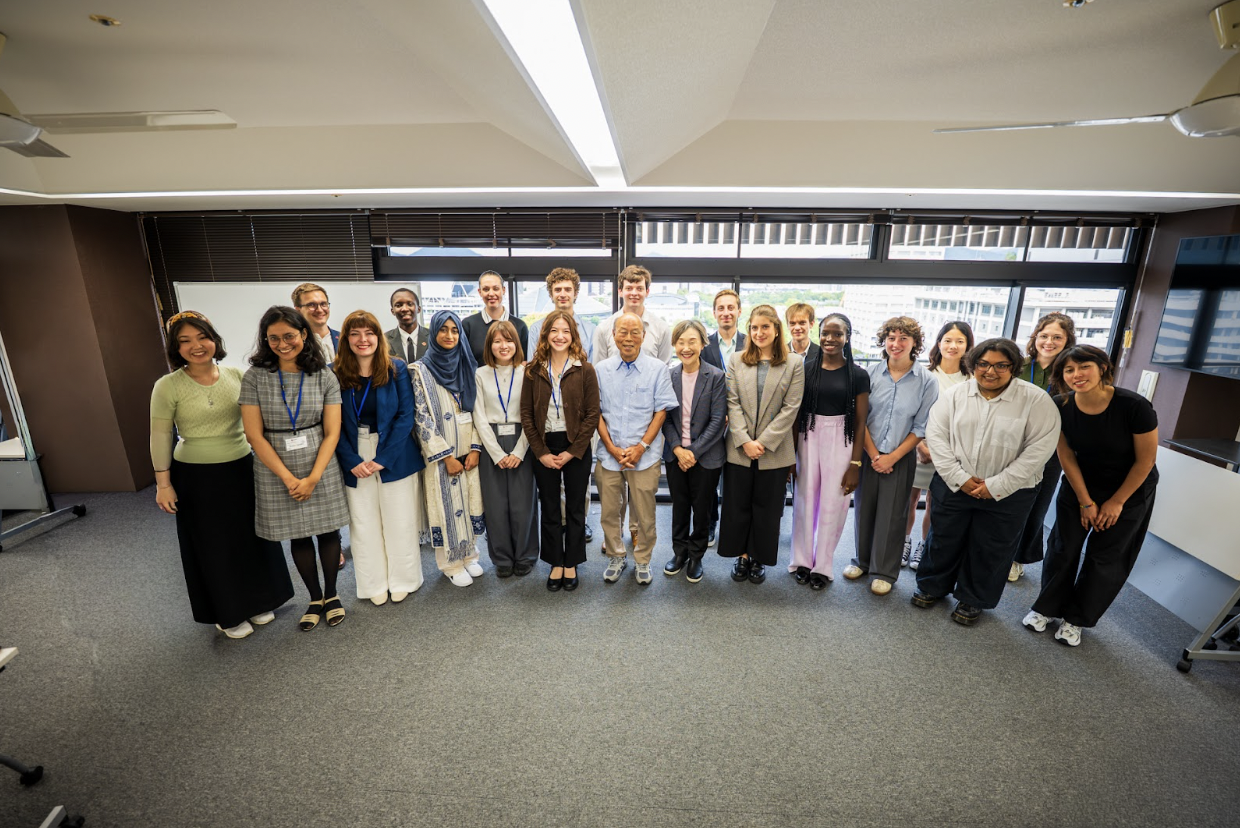
While I was a student at NYU, I got involved with the Nuclear Age Peace Foundation and Reverse the Trend during the 2025 NPT PrepCom. As someone whose professional and academic experiences centered on global justice, peace efforts, and youth advocacy, I became interested in nuclear disarmament advocacy and chose to register for the 2025 Hiroshima-ICAN Academy webinars. After hearing from hibakusha, downwinders, scientists, and policy experts in these sessions, I applied to the Hiroshima session of the program which brings 20 individuals from nuclear- and non-nuclear-weapons states to Hiroshima for five days to foster a global dialogue and engage in deeper learning. I learned that I was accepted to the program and in October, boarded my flight to Hiroshima.
The theme of the first two days was “Understanding the damage caused by the atomic bombing of Hiroshima.” We went to Peace Memorial Park, dedicated to the lives lost during the bombing on August 6, 1945 and located a few kilometers away from the hypocenter. We walked on the Aioi Bridge (“T-Bridge”) which was the visible target for the Enola Gay bomber due to its unique three-way “T” shape that could be seen clearly from the skies. We also saw the Atomic Bomb Memorial Burial Mound containing unidentified bones and ashes that were found around the city, and many of these remains are still being claimed today. After this, we met the (now former) Governor of the Hiroshima Prefecture Government, Hidehiko Yuzaki, and learned about short and long term peace efforts they are undertaking. Their initiative, the Hiroshima Organization for Global Peace (HOPe), combines a humanitarian impact approach, security approach, and sustainability approach to their work to collaborate with actors in government and civil society, working towards a world without nuclear weapons.
On the second day, we met with hibakusha and had the opportunity to sit with them and directly hear their testimonies. Their experiences at the time of the bombing were wide-ranging: two of them were adolescents, one is a legacy successor of a Korean hibakusha who had to hide their Korean identity to not face discrimination, and one– Koko Kondo– was just shy of 1 years old. I spent my time with Koko, whose experience is shaped largely by her father, Kiyoshi Tanimoto, a Methodist minister (a story that you can read more about in “Hiroshima” by John Hersey). Hearing her testimony first-hand was extremely impactful to me, illustrating exactly why this kind of work is important: intercultural and intergenerational conversations are critical to disarmament work as the aging population of hibakusha means that no one will be alive to directly share the experience of what it is like to be a victim of a nuclear attack. Later that day, we went to the Peace Memorial Museum and saw artifacts left behind from the bombing, and then had an advocacy workshop hosted by Florian Eblenkamp from ICAN on how to lobby governments to adopt the TPNW, become nuclear-weapons free zones, and better educate people on disarmament efforts.
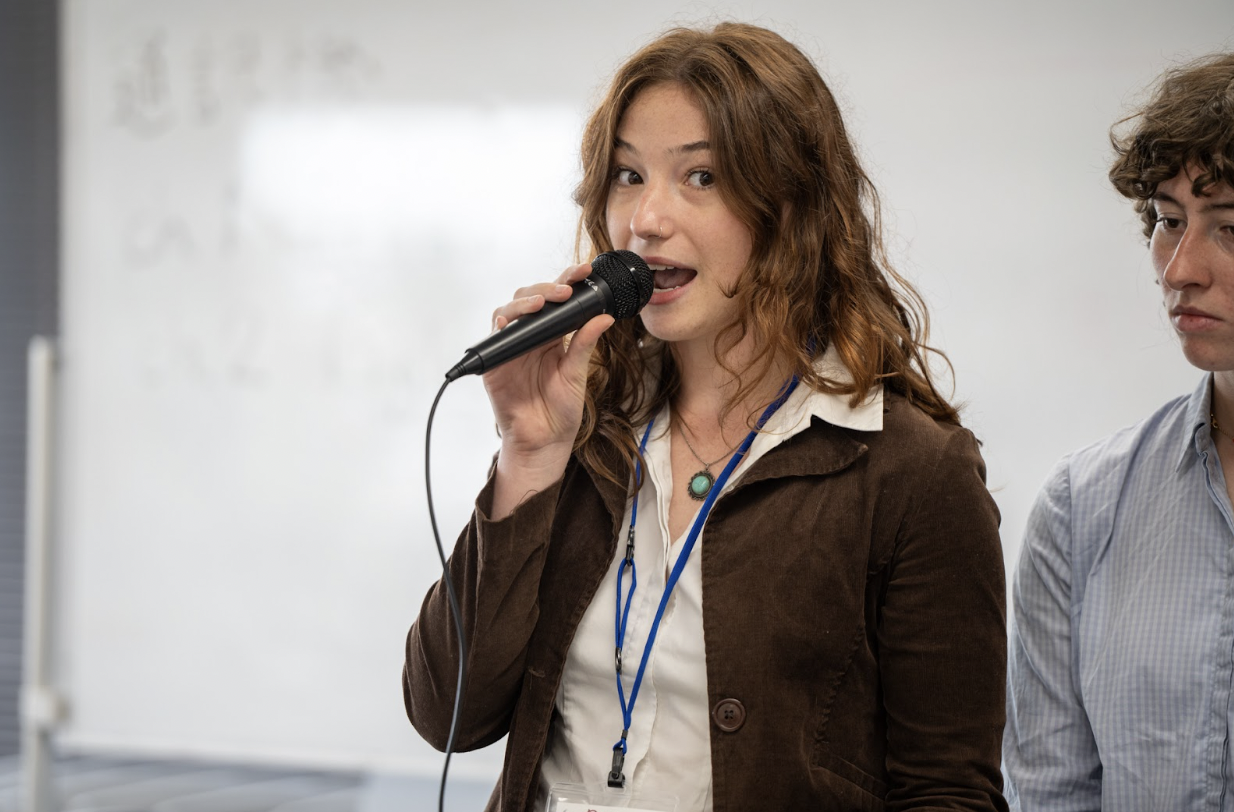
The theme of the third day was “Understanding the various kinds of nuclear damage, including those less known.” We heard from Taga-san, a second-generation hibakusha and advocate for foreign hibakusha. In addition to Japanese, many perished in the nuclear attack: Koreans, Chinese, Taiwanese, Malaysians, Indonesians, Bruneians, Americans, Russians, Germans, Spanish, and other victims were killed in the bombing, present in Hiroshima and Nagasaki for various reasons, ranging from being a prisoner of war, immigrant, student, or laborer. We learned how geopolitical contexts impacted not just who was killed in the bombing, but also the struggle to get recognition and aid as non-Japanese hibakusha. We then heard a presentation from Kinokokai, an association representing microcephaly sufferers and survivors. Microcephaly is a condition resulting in a small head circumference and varying levels of physical/mental impairment that impacted in-utero hibakusha. Hearing about this issue showed that nuclear weapons don’t just take many lives at once: radiation is a weapon inside people’s bodies and lasts for a long time. The final presentation that day focused on the bombing of Nagasaki, which had a more powerful bomb but less casualties because of its mountainous landscape. In both Hiroshima and Nagasaki, 62-63% of the population was affected by the bomb.
Our fourth day centered on the theme of “How to transform understanding into action?” We began with a session with the Deputy Mayor of Hiroshima City, Mikiharu Nakai, on Hiroshima’s establishment as a “Peace City.” We then heard from A-bomb legacy-successor Tsugumi Inoue, and Youth Peace Volunteer, Hinata Tamaki. Then, we went to the Radiation Effects Research Foundation (RERF), formerly the ABCC. The ABCC was run by the US military during its occupation of Japan after the war and has a controversial history due to lack of transparency on data collection and with hibakusha, causing them to be unaware of what was happening to their bodies and why. In 1975 it transformed into the RERF, which studies the long-term effects of radiation and is run by the US and Japanese governments.
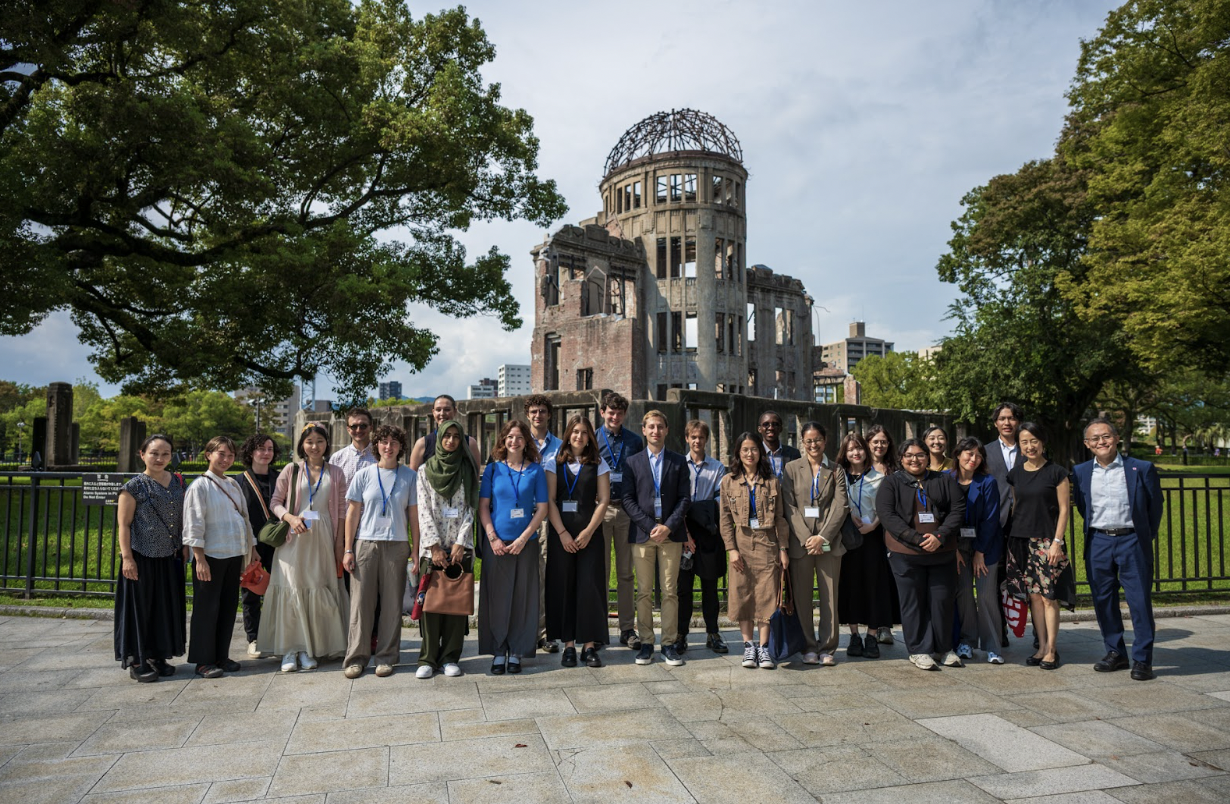
The final day of the program was dedicated to group presentations recapping what we learned and how it will impact our future work. My group spoke about the importance of intersectionality and the need to examine nuclear weapons from multiple lenses and perspectives.
I am immensely grateful to have participated in this program and got the chance to connect with other young people around the world like me who are dedicated to pursuing paths of peace over war. This program made me feel a renewed sense of hope, community, and radical optimism that we can one day live in a world free from nuclear weapons.